 Skip to content
In Southern California, we don’t experience the hard winters that signal “dormancy” in other parts of the country. Our trees often grow year-round, fueled by mild temperatures and sunshine. While this gives us beautiful greenery, it also leads to rapid overgrowth. A tree left untrimmed for two years can easily become a tangled mess of crossing branches, deadwood, and heavy foliage that blocks sunlight and creates a wind sail effect.
Proper tree trimming is more than just a haircut; it is a health regimen. In our drought-prone environment, trees are constantly competing for limited water resources. A canopy that is too dense requires more water than the roots can provide, putting the tree in a state of chronic stress. Strategic thinning reduces this water demand, allowing the tree to thrive even during dry spells while improving airflow through the branches, which is critical for preventing fungal diseases.
Timing is Everything: When to Trim
One of the most common questions we get is, “When is the best time to trim my trees?” The answer depends heavily on the species. For many deciduous trees, late winter (just before spring growth) is ideal because the tree is structurally visible and cuts heal quickly as sap begins to flow.
However, Southern California has a unique ecosystem. For example, pine trees should generally be trimmed in the cooler months (November through February) to avoid attracting bark beetles, which are active in the warmth and drawn to the scent of fresh sap. Conversely, trimming heavy, sap-producing trees in the height of summer can stress them out. Consulting with local agricultural extensions, like the UC Master Gardener Program, can provide homeowners with species-specific calendars, but a general rule is to avoid heavy pruning during the hottest weeks of the year to prevent “sunburn” on newly exposed bark.
Structural Integrity and Wind Resistance
Beyond health, trimming is a safety measure. A tree with a dense, “lion-tailed” canopy (where foliage is only at the ends of long branches) catches the wind like a sail. During our Santa Ana wind events, this drag can snap large limbs or uproot the tree entirely.
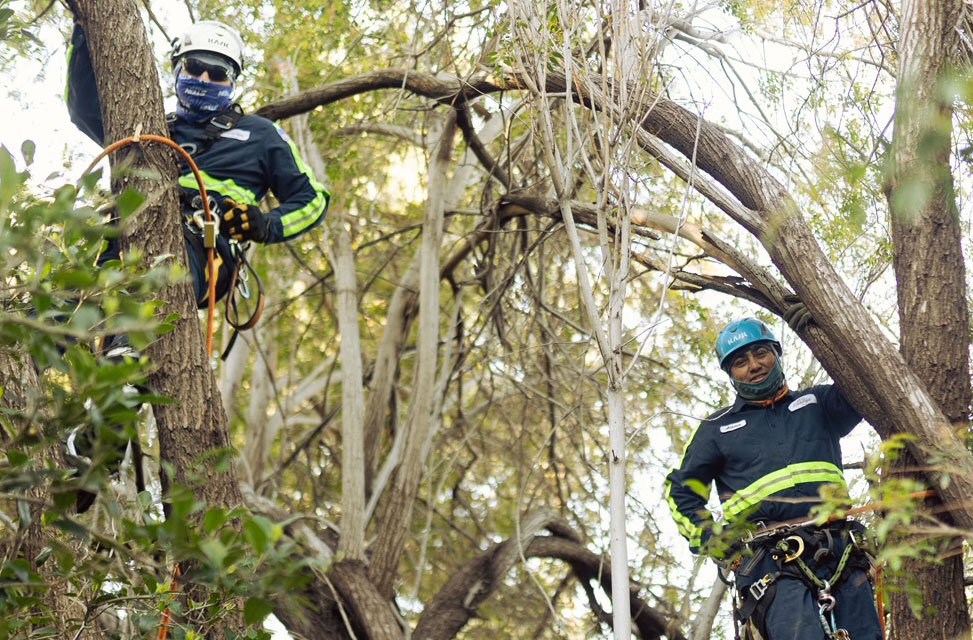
Professional trimming focuses on “crown thinning” and “crown cleaning.” We remove dead, dying, and diseased wood, as well as water sprouts and crossing branches that rub against each other. This reduces the weight of the canopy and allows wind to pass through the tree rather than pushing against it. It safeguards your roof and fence line without compromising the shade you rely on.
Boosting Curb Appeal and Fruit Production
Finally, let’s talk about aesthetics and yield. A well-trimmed tree is a beautiful tree. Raising the canopy can open up views, increase sunlight for your lawn below, and make your property look manicured and high-end.
For those with fruit trees—citrus, avocado, or stone fruit—proper pruning is essential for a good harvest. Removing unproductive wood directs the tree’s energy into producing larger, sweeter fruit rather than just growing more leaves. It also opens the center of the tree to sunlight, which is necessary for fruit ripening. Resources like Sunset Magazine frequently highlight how structural pruning transforms a backyard orchard from a jungle into a productive garden.
Your Southern California Experts for Tree Trimming
Your trees are a long-term investment that require regular care to stay safe and beautiful. Whether you need to thin a dense oak, shape a palm, or prune fruit trees for better yield, we have the expertise to do it right. Trust Rancho Tree Care to keep your landscape thriving in the California sun. Explore our Tree Trimming options or request a quote via our Contact Us link.