 Skip to content
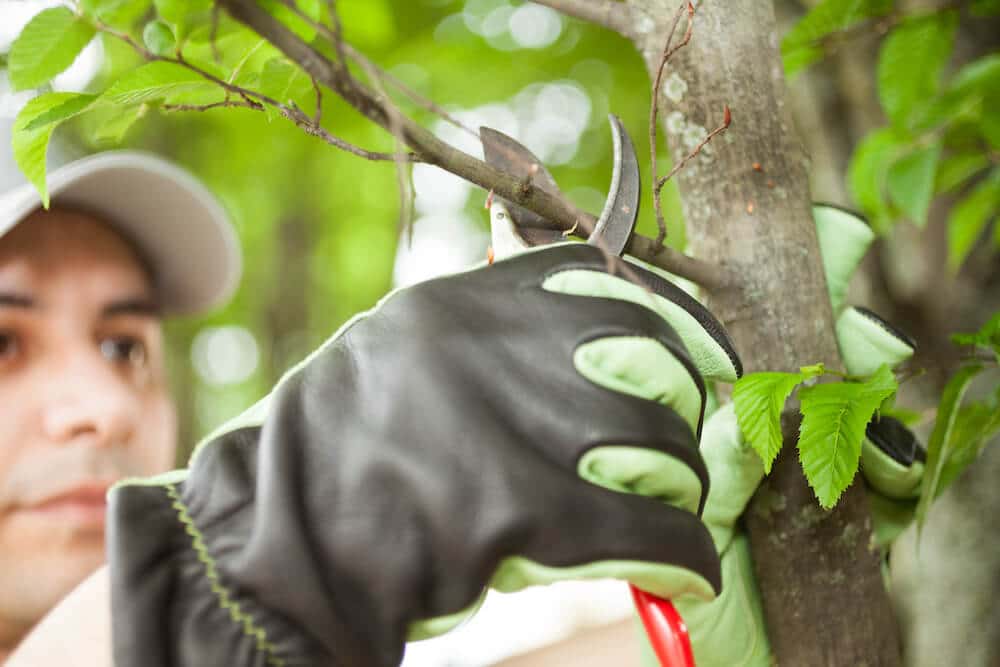
In the world of tree care, there is a right way to reduce a tree’s size, and there is a very wrong way. Unfortunately, we still see the wrong way practiced all over Southern California. It’s called “topping,” and it involves hacking off the top of the tree, leaving ugly stubs and stripping away all the leafy canopy.
Homeowners often ask for topping because they are worried the tree is “too big” or blocking a view. However, topping is a death sentence for many trees. It stresses the tree, promotes rapid (and weak) regrowth, and leaves the wood open to decay and sunburn. The professional alternative—the method used by certified arborists—is known as Lacing or “aesthetic thinning.” This technique reduces the weight and density of the tree without destroying its natural shape or health.
What is Lacing?
Lacing is an art form. It involves selectively removing branches from the interior of the canopy. The goal is to open up “windows” of light and air through the tree. When you look at a properly laced tree, it should still look like a tree—just lighter, airier, and more defined. You should be able to see the sky through the branches, but the overall silhouette remains natural.
This technique is vital for the health of the tree’s interior. In a dense canopy, the inner branches don’t get enough sunlight, so they die and become brittle. Lacing allows sunlight to penetrate deep into the crown, encouraging healthy growth throughout the entire structure, not just at the tips. Botanical institutions like the Huntington Library, Art Museum, and Botanical Gardens utilize these pruning techniques to maintain their world-class specimen trees, prioritizing structural integrity over size reduction.
The Santa Ana Solution: Reducing Wind Sail
In Southern California, our trees face a specific enemy: the Santa Ana winds. These high-speed, dry winds can topple massive Oaks and Pines. A tree with a thick, neglected canopy acts like a solid sail. When the wind hits it, the force has nowhere to go, putting immense strain on the trunk and roots.
Lacing creates channels for the wind to pass through the tree rather than pushing against it. By removing 20-25% of the foliage density, we significantly reduce the wind load (drag) on the tree. This is the single most effective way to prevent storm damage. A topped tree, ironically, becomes more dangerous in the wind because the new growth that shoots up from the cuts (called water sprouts) is weakly attached and snaps off easily.
Pruning for Views and Value
Many properties in our area have views—ocean, canyon, or city lights. Overgrown trees can steal these views, lowering property value. However, you don’t have to chop the tree down to get your view back.
Through “windowing” or crown reduction cuts, we can frame the view through the branches. This offers the best of both worlds: you get the shade, privacy, and cooling benefits of the tree, plus the view you paid for. It requires a skilled hand to know which branches to cut to open the sightline without making the tree look lopsided. The International Society of Arboriculture (ISA) provides standards for these types of cuts (ANSI A300), emphasizing that no more than 25% of a tree’s living canopy should be removed in a single season to prevent shock.
Your Southern California Experts for Tree Pruning and Lacing Services
Your trees are living sculptures that add immense value to your property. Don’t butcher them with topping; enhance them with professional lacing. We treat every cut as a decision for the tree’s long-term health and beauty. Trust Rancho Tree Care to shape your landscape with precision. Explore our Tree Pruning and Lacing Services or request a consultation via our Contact Us link.