 Skip to content
Living in Southern California—from the sweeping hills of Tarzana to the winding canyons of Pasadena—means enjoying some of the most beautiful weather and landscapes in the country. However, that beauty comes with a distinct and ever-present reality that every local property owner knows all too well: wildfire season. If you own property in the San Fernando Valley or the surrounding Greater Los Angeles areas, you have likely received notices from the local fire department or your home insurance provider regarding “vegetation management,” “weed abatement,” or “property clearing.”
At Rancho Landscape and Tree Care, we receive countless calls every spring and summer from homeowners asking the same fundamental questions: What exactly is brush clearing? Does it just mean mowing the lawn? And do I really need a professional tree and landscape company to handle it?
This comprehensive guide will define what professional brush clearing truly is, explain the vital concept of “defensible space,” and detail exactly why this specialized service is absolutely essential for protecting your property, your family, and staying compliant with strict local fire ordinances.
The Core Concept: What Does Brush Clearing Actually Entail?
Many homeowners mistakenly believe that brush clearing is nothing more than heavy-duty gardening or simply running a weed whacker around the perimeter of a grassy yard. While basic weed removal is certainly a small part of the process, true professional brush clearing is a much more comprehensive form of land and vegetation management.
In essence, brush clearing involves the systematic, strategic removal of vegetative hazards that create easily ignitable fuel for wildfires. It is the process of stripping a property of highly flammable materials, which includes:
- Dead or Dying Vegetation: This includes dry, brittle grasses, dead tree limbs, and accumulated pine needles or leaf litter that can ignite instantly from a single stray ember carried by the wind.
- Overgrown Chaparral and Shrubs: Southern California is famous for its dense chaparral. Thinning out this dense native vegetation is required to break the continuity of fuel beds, stopping a fire from marching directly toward a structure.
- Debris Accumulation: Clearing out the forgotten corners of a lot where dead organic matter piles up over the winter and bakes in the summer sun.
Professional brush clearing does not necessarily mean stripping your land completely bare down to the dirt—which can actually cause severe mudslide and erosion problems during the winter rains—but rather intelligently managing the vegetation to drastically reduce fire intensity.
The Science of “Defensible Space”
In wildfire-prone areas like the San Fernando Valley, Glendale, and the Santa Monica Mountains, the act of brush clearing is almost entirely synonymous with creating “Defensible Space.”
Defensible space is the physical buffer you create between a building on your property and the grass, trees, shrubs, or any wildland area that surrounds it. This space is essential for two primary reasons: first, it is designed to slow or completely stop the spread of an approaching wildfire; second, it provides a safe, cleared area for firefighters to stand and defend your home if a blaze does approach.
According to the official defensible space guidelines provided by CAL FIRE, California law requires homeowners in State Responsibility Areas to maintain 100 feet of defensible space around their structures. This is typically divided into two zones:
- Zone 1 (0-30 feet): This requires the most intense clearing, removing all dead plants, grass, and weeds, and keeping tree branches trimmed at least 10 feet away from any chimney or stovepipe.
- Zone 2 (30-100 feet): In this zone, the focus is on thinning vegetation, ensuring there is significant horizontal and vertical spacing between shrubs and trees to stop fire from easily jumping from plant to plant.
Ladder Fuels and The Threat of Invasive Species
A critical component of effective brush clearing is the mitigation of “ladder fuels.” This is a foundational concept in wildland fire safety. As explained by the National Park Service’s fire fuel behavior research, ladder fuels are live or dead vegetation that allow a fire to climb up from the landscape or forest floor into the tree canopy.
Common ladder fuels include tall grasses, small shrubs, and low-hanging tree branches. When a ground fire reaches these ladder fuels, it climbs into the larger trees, creating a “crown fire.” Crown fires are significantly more destructive, burn much hotter, and spread much faster than ground fires. A major part of brush clearing involves “limbing up” trees—removing those lower branches to eliminate the ladder.
Furthermore, brush clearing targets invasive plant species. Rapidly growing non-native plants, such as invasive mustard weed often found on Los Angeles hillsides, dry out quickly in the summer heat. They choke out native, more fire-resistant plants and create massive, highly flammable fuel loads that burn with intense ferocity.
Why DIY Brush Clearing Can Be Dangerous
While a small, flat residential lot might be manageable with a weekend of hard DIY labor, professional services are usually required for properties in hillside areas or those with significant overgrowth. Relying on a professional tree care and landscape company is almost always safer, more efficient, and more effective.
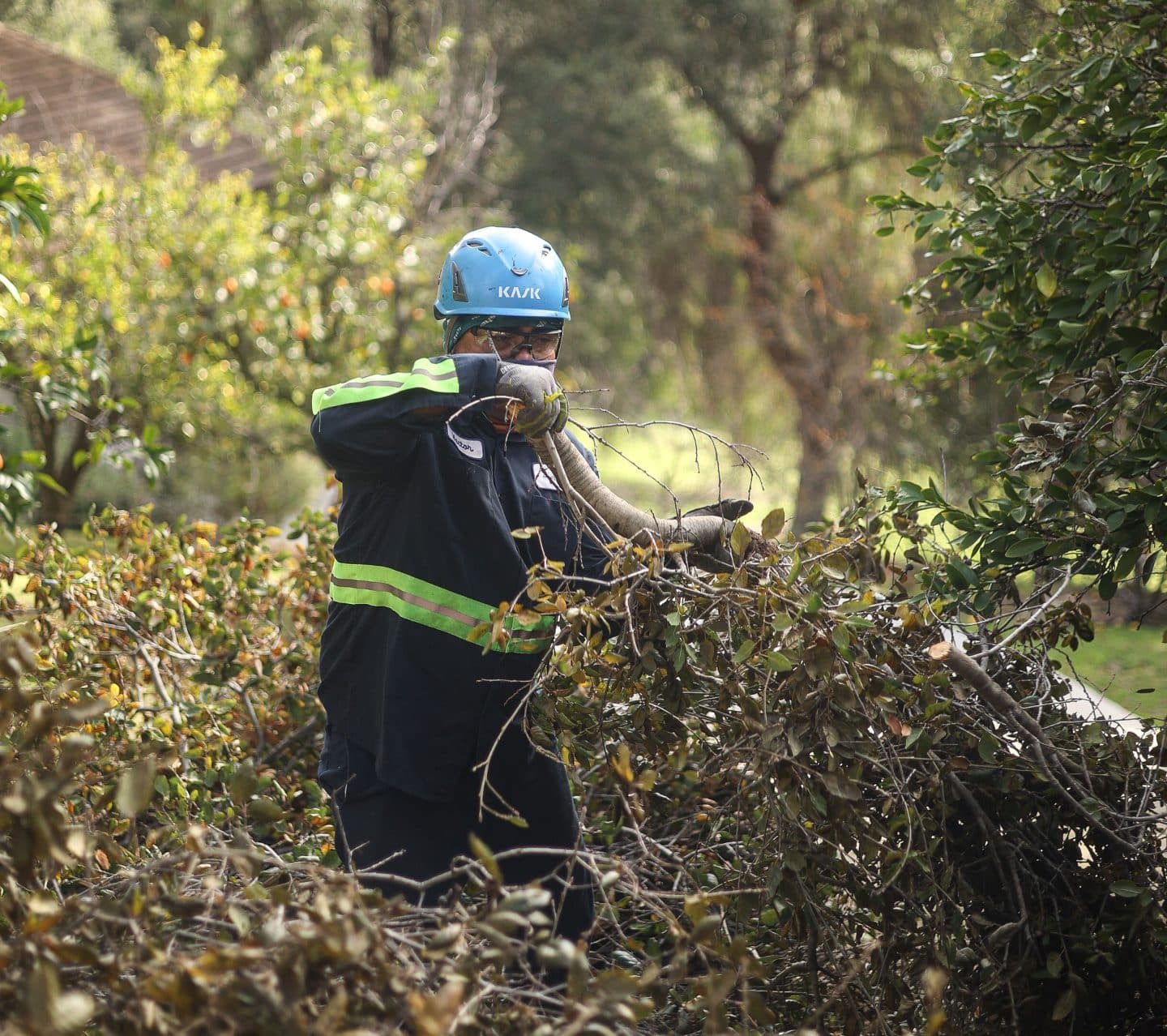
Clearing dense brush on a hillside requires heavy-duty, specialized equipment—industrial wood chippers, commercial brush mowers, and specialized hauling trucks for the massive amount of green waste produced. What might take a homeowner four grueling weekends of backbreaking labor can often be completed by a professional crew in just a day or two.
Moreover, brush clearing is inherently dangerous work. It often involves working on steep, unstable slopes, handling heavy machinery, and encountering hidden pests like rattlesnakes, spiders, or bees nested in the thick overgrowth. Crucially, operating equipment like metal-bladed weed whips or lawnmowers in dry grass can actually start fires if a rock is struck, sparking an ignition. Professional crews are highly trained in fire-safe equipment operations.
The Legal and Insurance Implications
Beyond physical safety, there are significant financial and legal reasons to maintain cleared property. In recent years, Southern California homeowners have faced a crisis of insurance non-renewals. If you have received a non-renewal notice from your home insurance provider, it is very often because their aerial or drone imaging shows a lack of crucial defensible space on your parcel.
Additionally, local jurisdictions like the Los Angeles Fire Department have strict brush clearance ordinances. Failing to comply after receiving a notice can result in heavy fines, or the city may hire a contractor to clear the land for you and attach the hefty bill directly to your property taxes.
Protecting Your Home Before Fire Season Peaks
Brush clearing is not just about landscape aesthetics; it is a critical measure for asset protection and community safety. By proactively removing hazardous vegetation, you are giving your property its best fighting chance against the devastating threat of a wildfire. Do not wait until the smell of smoke is in the air or a warning letter arrives in the mail to take action.
If you need expert help securing your property, Rancho Landscape and Tree Care has the heavy equipment and the local expertise to handle your brush clearing needs throughout the San Fernando Valley and Greater Los Angeles area. We are dedicated to helping our community stay fire-safe and compliant with all local ordinances. To schedule your property assessment and get your defensible space established, please visit our Contact Us page today.