 Skip to content
Storm Damage Tree Removal
Request a Free Estimate
"*" indicates required fields
Fallen, split and uprooted trees cleared from homes, driveways and yards across Los Angeles and Ventura counties.
What to Do When a Storm Brings a Tree Down
Stay well back from the tree and anything it is touching. If a limb or trunk is resting on a power line, call the utility company or 911 first and treat the line as live. Once no line is involved, call us on (818) 966-4784 and our crew will make the site safe, cut the fallen tree away from the house, car or driveway, and clear the debris.
Fallen Tree Removal, Step by Step
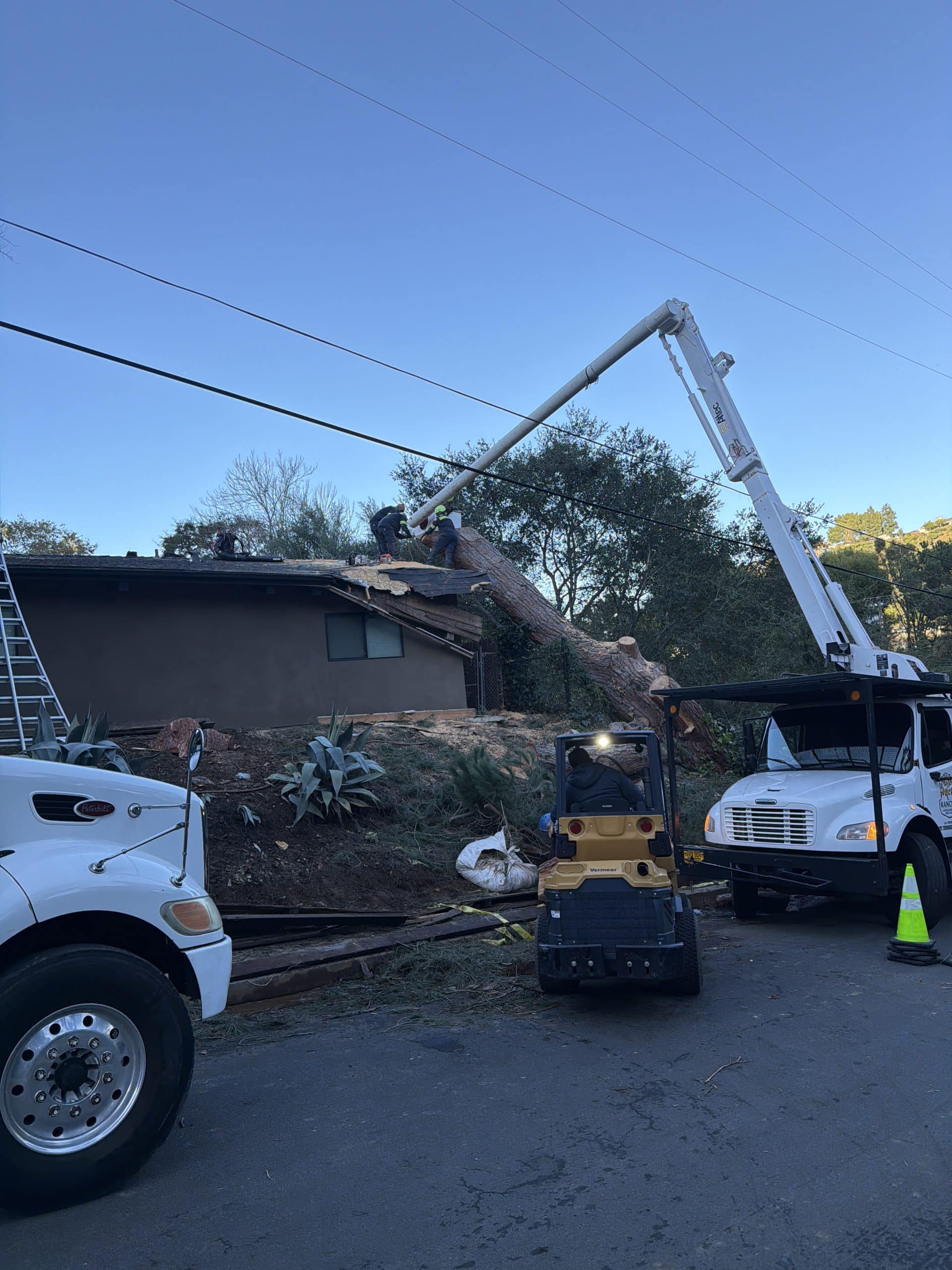
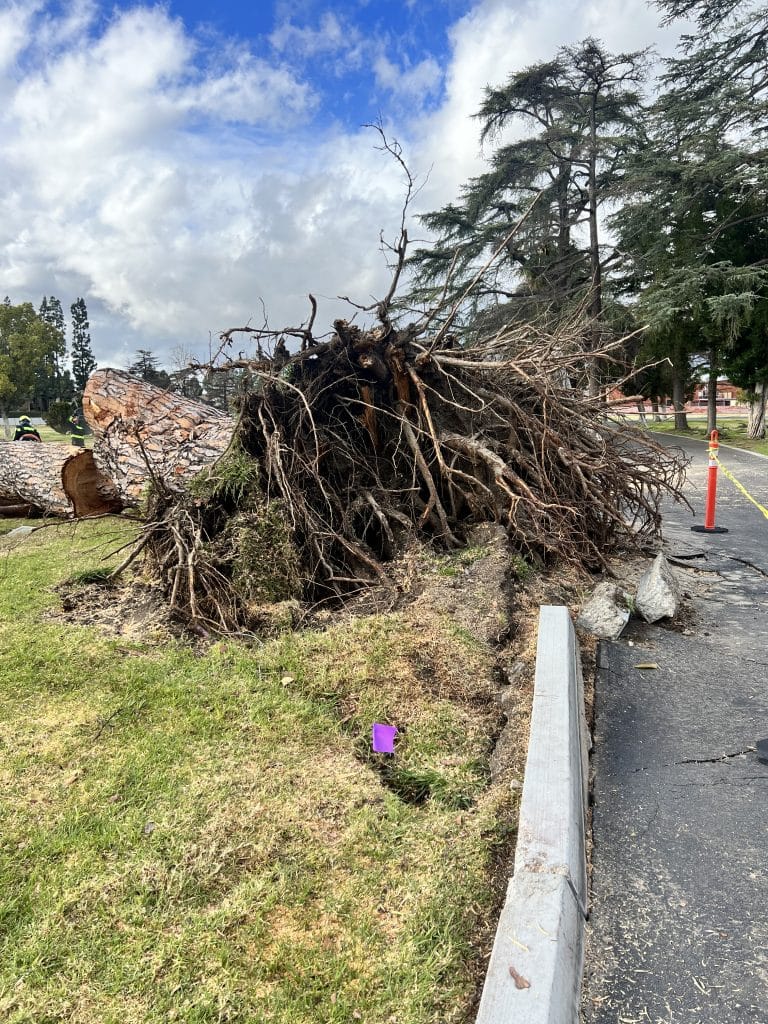
A tree that has come down in wind or heavy rain is under tension in ways a standing tree is not. Branches pinned under the trunk can spring back when cut, and a root plate that has lifted out of wet soil can shift again. So the first job is always an assessment: what the tree is resting on, which parts are loaded, and what could move.
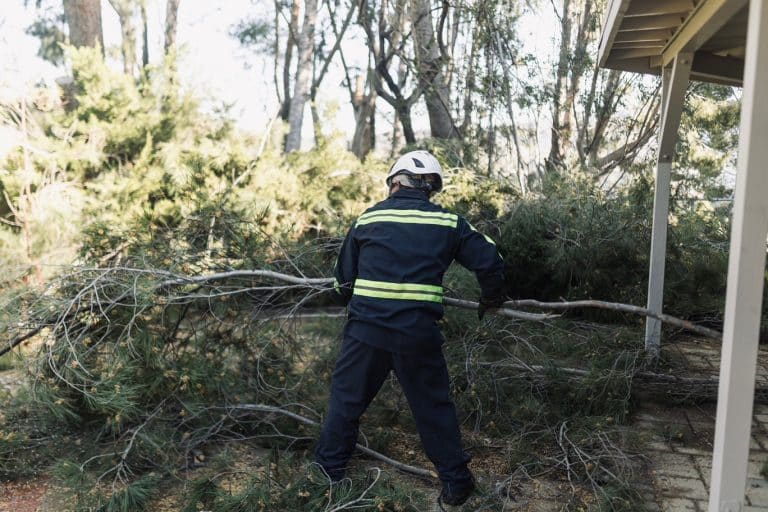
From there the crew removes the immediate threat, working from the outside in. Weight comes off the roof, vehicle or fence first, often with the bucket truck holding or lowering sections, and the trunk is cut down to manageable pieces once nothing is resting on a structure. The last step is the cleanup, so the yard is left clear rather than stacked with logs.
Storm Damaged Trees That Can Stay
Not every damaged tree needs to come out. A tree that has lost a limb or leaned slightly can often be kept and made safer. Windsail reduction thins the crown so it catches less wind, and cabling or bracing supports weak unions. Follow-up tree trimming or crown work usually comes a little later, once the site is safe. The International Society of Arboriculture’s TreesAreGood.org has a clear guide to judging whether a storm-damaged tree is worth saving.
Wind, Rain and Other Causes of Tree Failure
Most calls come after strong winds or a wet winter, but trees also fail after earthquakes, mudslides, a vehicle hitting the trunk, or simply age and disease. When a tree is down across a street-facing yard the cause matters less than getting it cleared safely. When it is a slow lean, knowing the cause helps decide between removal and support.
Before the Next Storm
The easiest storm removal is the one that never happens. Our article on dangerous tree signs to watch for before a windstorm covers cracks, dead limbs and root heave, and storm season tree trimming explains how thinning a crown ahead of time reduces the load. For a tree already showing those signs, a planned tree removal costs you far less stress than an emergency one.
Photos From Our Storm Damage Work
 |  | 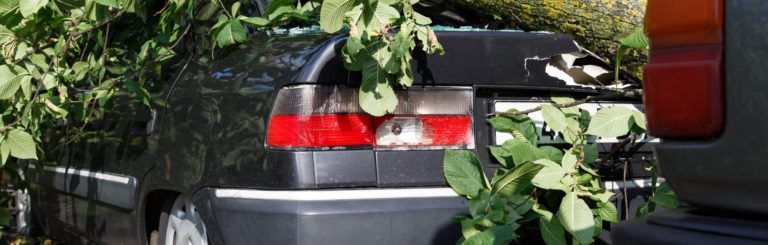 |
Frequently Asked Questions
It is safer not to. A fallen tree is often under tension, and branches can spring back or the trunk can roll when cut. Keep people and pets away and let a trained crew handle it.
Call the utility company or 911 first. We do not approach the tree until the power company confirms the line is safe.
Yes. The weight is taken off the roof in sections that are held and lowered, rather than dragged, so the roof is not loaded further while the tree is cut away.
Not always. Some leaning or damaged trees can be stabilized with windsail reduction, cabling or bracing. We assess the roots and the trunk before recommending removal.
Debris haul-away is part of the job, and stump grinding is available as a separate step once the tree is down.
CONTACT RANCHO LANDSCAPE AND TREE CARE
Get a Storm Damage Tree Removal Estimate
Tell us about the trees and the property, and we will arrange a visit and a clear estimate.
Call us: (818) 966-4784
REQUEST A FREE ESTIMATERANCHO LANDSCAPE AND TREE CARE