 Skip to content
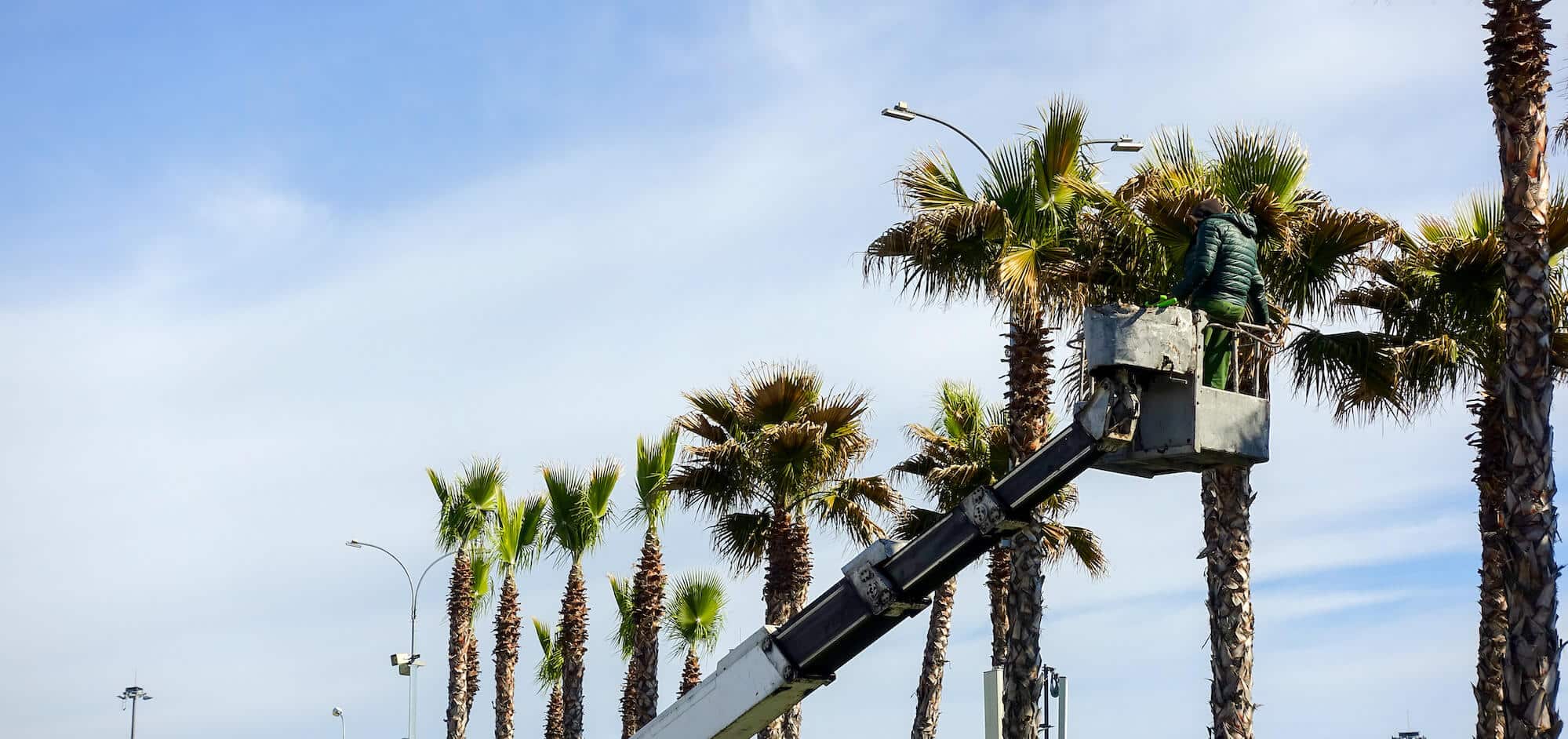
Commercial Palm Skinning for HOAs, Apartments and Shopping Centers
Palm programs written as a schedule for common areas, apartment communities and retail centers
across Los Angeles and Ventura counties.
Palms are everywhere on commercial property in Southern California because they photograph well and take up almost no ground area. What they also do, if nobody maintains them, is drop. Dead fronds, seed pods and old boots come off a mature palm without warning, and on a property with cars, walkways and residents underneath them, that is a liability question rather than a landscaping preference.
This page is for the people who have to sign off on that: HOA boards, property managers, apartment community managers and the people running retail centers. It covers what palm skinning is, how a commercial program differs from a one-off residential job, and what a manager needs to specify to get comparable bids.
Skinning, Trimming and Removal Are Different Jobs
These three words get used interchangeably in bids and they should not be. Skinning is the removal of the old frond bases — the boots — from the trunk, leaving the clean, smooth trunk people associate with a well-kept property. Trimming is the removal of dead and dying fronds and seed pods from the crown. Removal is taking the tree out entirely.
A property usually needs trimming on a regular cycle and skinning far less often. Bids that price “palm maintenance” without saying which of the three they include are not comparable to each other, and that is the single most common reason two bids on the same property look wildly different.
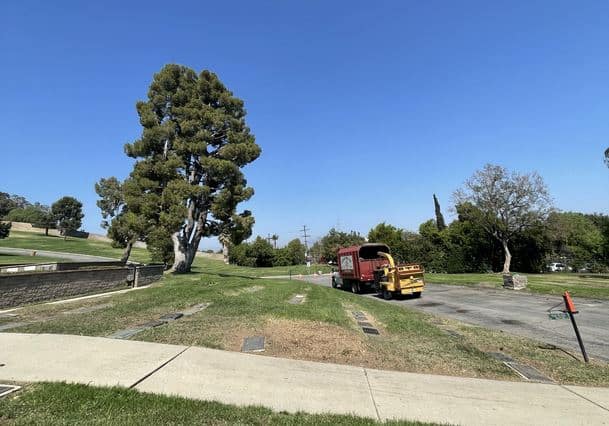
Skinning on Commercial Property
Skinning takes the rough weave of old frond bases off the trunk and leaves a clean stem. On a commercial property it is the job that changes how the whole frontage reads, and it is not needed every cycle.
It is also the job most often confused with trimming in a bid, which is why a program should name it separately.
Why Commercial Palm Work Is Not a Bigger Residential Job
On a house, one crew works one tree and the homeowner moves a car. On a commercial property the tree work is the easy part. The job is sequencing: which sections of parking are closed and when, how tenants and residents are told, where the drop zone sits relative to walkways, how the material leaves the site, and whether any of it can happen during business hours at all.
That is why a commercial palm program is written as a schedule rather than a visit. A manager who has to send one notice instead of six, and who knows which rows of parking are affected on which morning, has a much easier week than one who does not.
What Property Managers Are Actually Buying
- Reduced overhead risk. Dead fronds and seed pods removed from crowns above parking, walkways, pool decks and play areas.
- A consistent look. Palms on one property that have been skinned and trimmed to the same standard rather than to whoever was available.
- Less mess to clean up. Untrimmed palms shed continuously. Trimmed palms shed at the visit.
- Fewer complaints. Residents notice palm litter on their cars long before they notice anything else about the landscaping.
- One point of contact. A schedule agreed with the board or the manager, and a crew that turns up on it.
- Documentation. A record of what was done and when, which is the thing a board actually needs when a question comes up later.
| Property type | What makes it different | What the program does about it |
|---|---|---|
 HOA common areas HOA common areas | Palms the association maintains, and the boundary with owner lots | A walked inventory so the boundary is written down before the work starts |
 Apartment communities Apartment communities | Work over occupied parking, walkways and patios | Resident notice and staged access so the property keeps functioning |
 Retail centers and office parks Retail centers and office parks | Parking that has to stay open while the crew is overhead | Sections closed and reopened in sequence, usually off peak |
 Fire fuel and seed pods Fire fuel and seed pods | Dead fronds and heavy pods above people and cars | Removed on the cycle rather than after a complaint |
HOA Boards and Common-Area Palms
In an HOA the recurring question is boundaries: which palms are the association’s responsibility and which belong to an individual owner. That is settled by the governing documents rather than by the tree crew, and any contractor who tells you otherwise is guessing. What we can do is walk the property with the board or the manager, identify every palm, and price the work in the categories the association actually uses. More on how we work with associations is on the HOA tree services page.
Trimming on a Regular Cycle
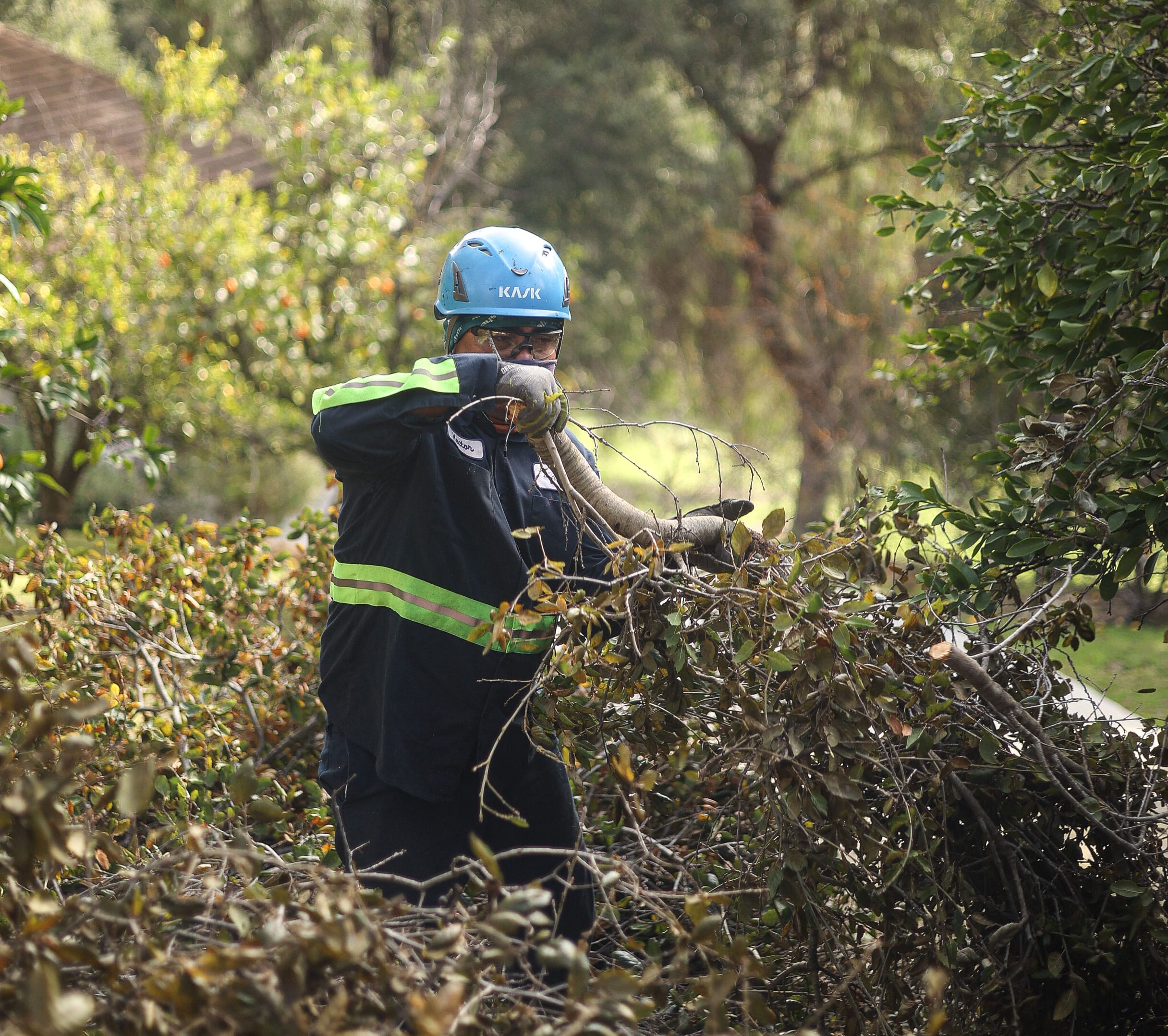
Trimming removes dead fronds and seed pods from the crown. On a property with residents, cars and footfall underneath, that is the work that keeps the overhead risk down between visits.
Apartment Communities
Apartment properties add the resident-notice problem. Work over occupied parking has to be scheduled and communicated, and the crew has to be able to move through the property without leaving a walkway blocked. In practice that means the schedule is built backwards from the notice period the management company needs, not forwards from when a crew is free.
Retail Centers and Office Parks
Retail is the most constrained of the three, because the parking that has to close is the parking the tenants depend on. Most retail palm work therefore happens early, in sections, and the sequencing is agreed with center management before anything is scheduled. The wider commercial offering is on the commercial tree services page.
Removal and Replacement Decisions
Removal comes up when a palm is failing, is in the wrong place for the building, or has outgrown what the site can maintain. On commercial ground that decision usually belongs to a board or a manager rather than to the crew.
Fronds, Seed Pods and Fire Fuel
Two more reasons commercial palms get attention. Seed pods are heavy, they stain paving and they attract vermin once they drop and rot. And a palm carrying a full skirt of dead fronds is carrying dry fuel high up in the air, which matters on any property near open ground — the same reasoning behind brush clearance work.
Getting Comparable Bids
Specify four things and every bid you receive becomes readable: how many palms and of what height; whether you are asking for skinning, trimming or both; what happens to the material; and what the visit frequency is. Without those, you are comparing four different jobs that all happen to be called palm maintenance.
Frequently Asked Questions
It depends on the species and on how much litter the property will tolerate. The practical approach is to walk the site, agree a cycle that suits those palms, and adjust it after the first round rather than committing to a fixed interval before anyone has seen the trees.
It is mostly appearance, and on a commercial property appearance is part of the product. It also removes material that harbors pests and shelters dry fuel against the trunk, so it is not purely cosmetic.
Rarely, and it is safer not to try. What can be done is close parking in sections, on an agreed morning, with notice given in advance so residents and tenants are not surprised.
The association’s governing documents do. We identify and price every palm on the property; which category each one falls into is the board’s call.
Yes. Multiple properties under one management company are usually easier to run as one schedule than as separate jobs, because the notice periods and the reporting are the same.
Commercial and HOA Tree Services in Los Angeles, CA
Every service below has its own page with the detail that matters on commercial ground.
CONTACT RANCHO LANDSCAPE AND TREE CARE
Have the property walked and the palms priced
Tell us how many palms, what sits under them and when the site can give up its parking, and we will put a program against it.
Call us: (818) 966-4784
REQUEST A QUOTELOS ANGELES, CA
Ask About a Commercial Palm Program
To have a property walked and the palms priced, call (818) 966-4784 or use the contact page. We work across Los Angeles and Ventura counties.
"*" indicates required fields