 Skip to content
We all love the lush canopy that defines our Southern California landscape. From the majestic Coast Live Oaks providing shade in summer to the towering palms that line our streets, trees are an essential part of our property value and quality of life. However, living in our unique Mediterranean climate—with its cycles of intense drought followed by heavy rains, and the notorious Santa Ana winds—means that trees can sometimes become liabilities rather than assets.
Recognizing when a tree has shifted from a landscape feature to a safety hazard is crucial for every homeowner. A tree that looks sturdy on the outside might be suffering from internal decay, root rot caused by recent floods, or infestation from aggressive pests like the Goldspotted Oak Borer or the Shot Hole Borer. When a tree’s structural integrity is compromised, it’s not a matter of if it will fall, but when.
The Danger of the “Wait and See” Approach
Many property owners hesitate to remove a tree because of the cost or emotional attachment. However, waiting often compounds the risk. In Southern California, the Santa Ana winds can reach hurricane-force speeds, easily toppling trees that have shallow root systems or heavy, unbalanced canopies. A fallen tree can cause devastating damage to roofs, vehicles, and power lines, leading to liability issues that far exceed the cost of professional removal.
Beyond the wind, we also have to consider the “silent killers” like root rot (Phytophthora). This soil-borne disease thrives in warm, moist soil—conditions often created by overwatering or poor drainage. It eats away at the tree’s anchor, meaning a seemingly healthy green tree can topple without warning. Professional assessment by a certified arborist is the only way to truly gauge stability. Resources like The Arbor Day Foundation offer excellent guides on spotting early signs of tree stress, such as vertical cracks in the trunk or dieback in the upper crown.
Navigating Local Protections and Permits
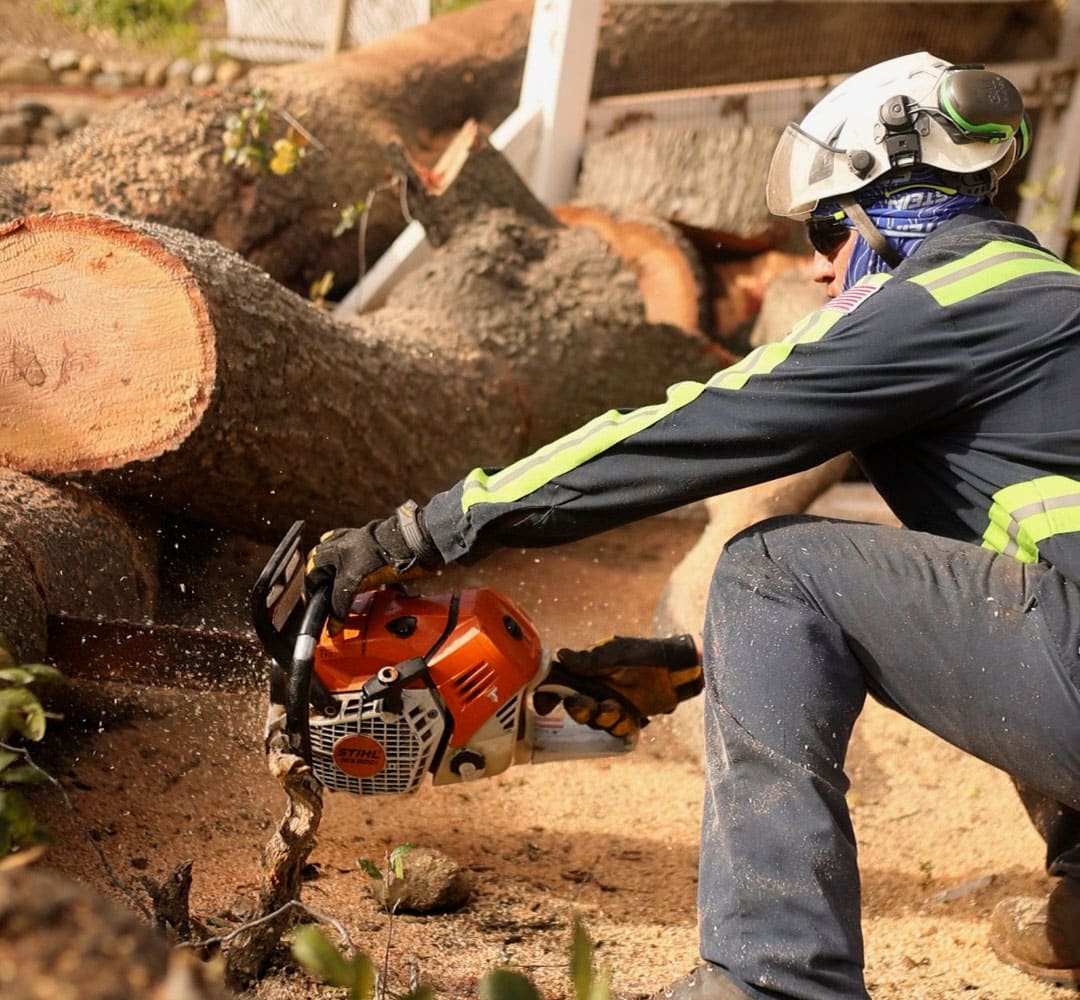
Tree removal in our region isn’t always as simple as firing up a chainsaw. Southern California has some of the strictest tree protection ordinances in the country. Native species like the California Sycamore, Southern California Black Walnut, and specifically the Coast Live Oak are often protected by city and county laws. Removing these trees without a permit can result in hefty fines.
A professional tree care service handles this bureaucratic headache for you. We understand the specific ordinances for cities across the region and can determine if your tree is a protected species or if it poses an “imminent threat” that bypasses standard permit wait times. We also ensure that the removal is performed safely, using cranes and rigging to dismantle the tree piece by piece, protecting your hardscape and landscaping below. Organizations like the International Society of Arboriculture (ISA) emphasize that hiring insured, licensed professionals is non-negotiable for these high-stakes operations.
The Cleanup: More Than Just Cutting
Finally, safe removal includes what happens after the tree is down. Leaving a stump behind is an invitation for termites and fungi. A complete removal service includes grinding the stump below grade and chasing out the surface roots, allowing you to reclaim that patch of dirt for new planting or hardscaping. We also ensure that all green waste is recycled responsibly, often turning it into mulch that can benefit the rest of your garden.
Your Southern California Experts for Tree Removal Services
Don’t let a hazardous tree threaten your home or your peace of mind. We specialize in the safe, legal, and efficient removal of trees that have outgrown their welcome. Trust Rancho Tree Care to handle the heavy lifting while protecting your property. Learn more about our specialized Tree Removal Services or schedule a hazard assessment today via our Contact Us page.